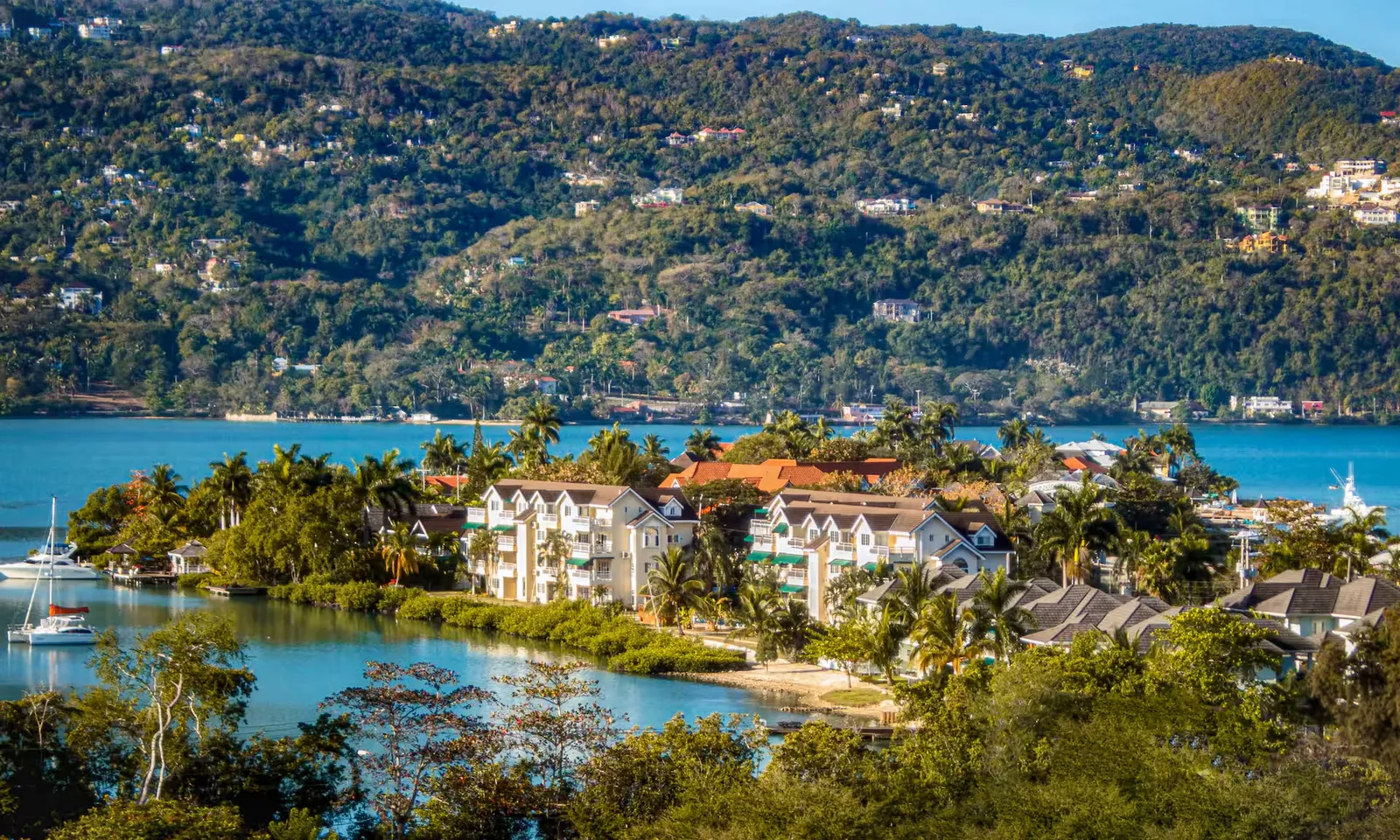
Jamaica’s construction story did not begin with this year’s cranes. It began with a decade of fiscal discipline that turned the island into a place global capital trusts. Today a US$4.2 billion hotel pipeline, national reconstruction after Hurricane Melissa, a 49.7% jump in the value of building plans, and brand arrivals such as Montego Bay’s first Marriott, the AC Hotel on the Hip Strip, point in one direction. My view: this is a structural shift, not a cycle, and well-chosen property is still priced for the Jamaica of yesterday.
I have sold property in Montego Bay for more than a decade, and I can tell you the moment a market changes is rarely announced. It shows up first in the conversations: which buyers call, what they ask, how long they are prepared to hold. Over the past year those conversations have changed. Buyers are no longer asking whether Jamaica is worth a look. They are asking how early they can be.
This is my view of why, and what it means for anyone considering property here.
A decade that rebuilt confidence
To understand today’s boom, go back to 2012. As Builders Jamaica recalled in its 2023 cover story, the construction industry had just shrunk 4.4% in the first three quarters of that year, inflation was high, and the country’s agreement with the International Monetary Fund was far from certain. Few would have predicted what came next.
From 2013, construction recorded six consecutive years of growth, and even rose about 9% in 2021 while much of the world was locked down. The Planning Institute of Jamaica’s Hugh Morris credited the fiscal consolidation programme with drawing in private investment, noting that lending to the construction sector rose from J$21.1 billion in 2012 to J$53.9 billion in 2022.
That is the foundation everything else stands on. Capital does not go where it is merely welcome. It goes where the rules are stable, the debt is falling and the currency is managed with discipline. Jamaica spent ten years earning that reputation.
The boom, in numbers
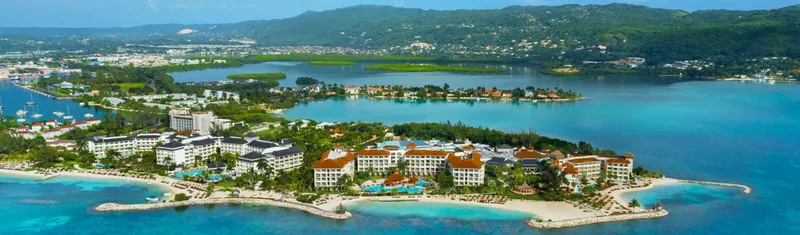
- Hotels: some US$4.2 billion in hotel investment facilitated through JAMPRO, adding about 8,943 rooms and around 25,700 jobs, including Harmony Cove in Trelawny (about US$1 billion and 1,600 rooms, with infrastructure works under way), Moon Palace Phase 2 (about US$700 million and 1,350 rooms, at approval stage) and Grand Palladium Phase II in Hanover (about US$569 million and 948 rooms).
- Building plans: according to the PIOJ’s Economic and Social Survey, as reported by the Observer, the value of building and planning applications reached J$280.9 billion in 2025, up 49.7% on 2024, from 4,609 applications. Residential projects made up 86% of them.
- Reconstruction: Hurricane Melissa took some 6,200 hotel rooms out of circulation in October 2025 and damaged homes and infrastructure across the west. The new National Reconstruction and Resilience Authority is expected to lift construction activity as it becomes fully operational. Construction grew 0.3% in the April to June quarter, helped by civil engineering, while public investment spending rose 55.8%.
- Housing need: the government has cited a national housing deficit of around 150,000 units. Demand is not in question; supply is.
The economy as a whole is still recovering. The PIOJ expects output to return to pre-hurricane levels between April and June 2027, with full recovery over three to five years. That is exactly the window in which rebuilding and new investment tend to do their heaviest lifting.
Why Jamaica, why now: what the boom does to property values
Construction on this scale does three things for a property market. It brings jobs and people, which supports rental demand. It upgrades the infrastructure around existing homes, which supports values. And it signals to international buyers that serious institutions have already done their due diligence. Add the landmark residential and mixed-use projects already reshaping Montego Bay, including The Pinnacle on the Reading Peninsula and Richmond Hill Club, and the direction of travel is clear.
What is being announced now: the AC Hotel and more
If you want a single signal of where Montego Bay is heading, look at Kent Avenue on the Hip Strip. On the former Sandals Carlyle site, Sandals Resorts, led by Adam Stewart, is developing an AC Hotel by Marriott, the city’s first Marriott property. Reported at about 165 rooms with a rooftop sky deck and conference space, it is designed as a European Plan hotel rather than an all-inclusive, so guests eat, shop and spend in the city. It is scheduled to open in 2027.
Senator Delano Seiveright called it “a major gamechanger for Montego Bay”, and I agree. An EP hotel of this calibre changes the character of a street. It brings business travellers, weekend visitors and conference guests who walk, dine and discover. That is how a strip becomes a district, and how the property around it is revalued.
It is not alone. In the past few months alone:
- Marriott signed its first all-inclusive in Montego Bay, a 522-room resort with Catalonia on the former Holiday Inn site, due in 2028.
- Royal Caribbean Group agreed to take a 50% stake in Sandals and Beaches Resorts for about US$3 billion.
- Accor’s Ennismore arrived in Jamaica through The Pinnacle, a US$450 million estate of branded residences on the Reading Peninsula.
- The government put the Hip Strip and waterfront redesign back on the agenda, with the Freeport area singled out for special attention.
Global money is moving again. Why some of it lands here
Around the world, real estate capital is back. JLL reports that direct real estate investment rose 28% year on year in the second quarter of 2026, hotel investment rose 29%, and investment in residential and living assets was up about 9% in the first half. Investors, JLL notes, increasingly treat volatility as structural rather than a reason to wait.
When volatility becomes the norm, wealthy families and institutions look for three things: hard assets, stable jurisdictions and places with lasting demand. In my view, Jamaica now offers all three, with some advantages that are easy to overlook:
- Open ownership. There are no restrictions on foreign ownership of property. An investor from Toronto, Atlanta, London or Lagos buys on the same terms as a Jamaican.
- A familiar legal system. English is the official language and the legal system is based on English common law, which makes title, conveyancing and contracts familiar to North American and British buyers.
- Proximity. Montego Bay is a short flight from Miami and a few hours from New York and Toronto, in a time zone aligned with the US East Coast.
- Tourism demand that is being underwritten by global brands. When Marriott, Accor, Royal Caribbean and Hard Rock all commit to the same island, rental demand has powerful backers.
- A diaspora that invests at home. Jamaicans abroad have long been among the most committed buyers of property on the island, and they bring both capital and loyalty.
The honest caveats
An informed opinion has to include the risks. Inflation was 7.5% in July, above the Bank of Jamaica’s target, and the policy rate sits at 5.50%. Shipping and material costs rose sharply in the first half of 2026, pushing up the cost of new construction. Some brand-name hotel projects have been delayed. And the economy is still climbing back from the hurricane.
These are real, but they cut both ways. Higher building costs make well-located existing homes more valuable. A recovery still in progress means pricing has not yet caught up with the pipeline. And delays in some projects make delivered projects more valuable still.
My view
I believe Jamaica is in the early years of a structural shift, not the late stages of a cycle. The discipline of the last decade created the conditions; the capital of this decade is now arriving to use them. Montego Bay sits at the centre of it, with the airport, the hotel pipeline, the branded residences and a waterfront being reimagined around them. For buyers with a five to ten year horizon, the window between announcement and completion is often where long-term value is made.
For buyers, the opportunity is not everywhere, and it is not automatic. It sits in the right streets, the right buildings and the right terms. That is where advice matters most: comparable sales, construction quality, title, management and an honest view of carrying costs.
If you are considering a home, a second residence or an investment in Jamaica, I would be glad to share what I am seeing on the ground, candidly and without obligation.
Frequently asked questions
Is there a construction boom in Jamaica in 2026?
Yes. Some US$4.2 billion in hotel investment is in Jamaica’s pipeline, adding about 8,943 rooms, the value of building and planning applications rose 49.7% to J$280.9 billion in 2025, and national reconstruction after Hurricane Melissa is adding civil engineering and housing activity.
What is the AC Hotel in Montego Bay?
The AC Hotel by Marriott Montego Bay is a hotel being developed by Sandals Resorts, led by Adam Stewart, on the former Sandals Carlyle site on Kent Avenue, on Montego Bay’s Hip Strip. Reported at about 165 rooms, it will be the city’s first Marriott property and is scheduled to open in 2027 as a European Plan, non-all-inclusive hotel.
Why are global investors interested in Jamaica?
Jamaica combines a decade of fiscal discipline, no restrictions on foreign property ownership, an English common law legal system, proximity to North America, strong tourism demand backed by global brands such as Marriott, Accor and Royal Caribbean, and a large diaspora that invests at home.
Can foreigners buy property in Jamaica?
Yes. Jamaica places no restrictions on foreign ownership of property, so overseas buyers purchase on the same legal footing as Jamaicans, working with a Jamaican attorney.
Is now a good time to invest in Montego Bay real estate?
Montego Bay is at the centre of Jamaica’s hotel pipeline, branded residential development and a planned waterfront redesign. Returns depend on location, building quality, title and carrying costs, so each property should be assessed on its own numbers. This is general information, not investment advice.
Who can advise on luxury and investment property in Montego Bay?
Kamilah McGann Fairclough is a Montego Bay luxury real estate and investment consultant with Coldwell Banker Jamaica Realty, a Coldwell Banker Global Luxury Property Specialist and a Top 10 Producer in 2024 and 2025. Call or WhatsApp +1 876 324 6295.